What is OCR? Definition, How It Works, Advantages, and Its Applications in Various Industries


In the digital era, many companies still rely on physical documents, photos, and PDFs as part of their operational processes. From customer ID cards, vendor invoices, and bank statements to legal contracts — all are still often stored in forms that are difficult to process automatically.
This is where OCR (Optical Character Recognition) technology plays a crucial role as the foundation for document digitization.
In short, OCR is a technology capable of converting text from images or unstructured files into machine-readable digital text. This technology paves the way for significantly higher automation, accuracy, and efficiency across various industries, particularly in the financial and fintech sectors.
This article discusses the definition of OCR, how it works, its main advantages, and examples of its application in the business world.
1. What is OCR?
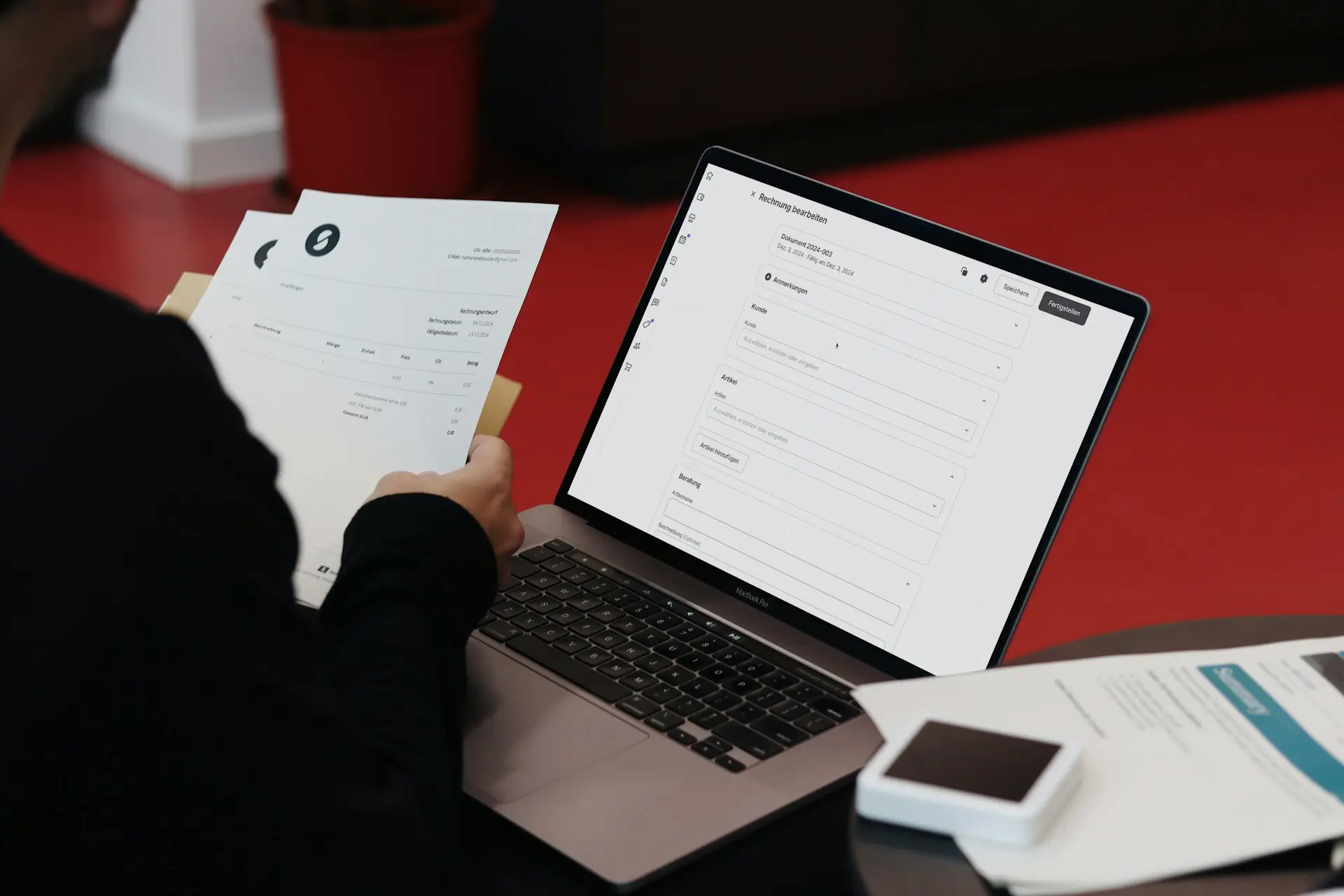
OCR (Optical Character Recognition) is a technology that extracts text from visual files such as photos, scans, or PDFs and converts it into digital characters. Unlike ordinary scanning which only produces an image, OCR actually reads the content of the document, resulting in text that can be searched, copied, analyzed, and processed by a system.
A simple example of the use of this technology is as follows:
- A photo of an ID card → is converted into text containing the name, address, and ID number
- A scanned bank statement → is converted into a list of transactions.
- A vendor invoice in PDF format → is converted into data for price, quantity, and date.
OCR serves as the foundation for various advanced technologies such as document parsing, data extraction, fraud detection, and document verification automation.
2. How Does OCR Work?
Although built with complex algorithms, the way OCR works is quite straightforward and easy to understand. Here is the process:
a. Image Preprocessing
The system cleans the image quality to make it easier to read. For example:
- removing noise,
- adjusting contrast,
- correcting image orientation,
- and cropping important areas.
b. Text Detection
OCR detects areas containing letters, numbers, or symbols. This process separates text from other elements such as lines, tables, or background graphics.
c. Character Recognition
This is the core of OCR. The system uses AI models to recognize character patterns one by one and translate them into digital text.
d. Post-Processing
The resulting text is cleaned up, corrected, and adjusted according to language format or context.
e. Output as Digital Text or Structured Data
The text can be stored, analyzed, or integrated into other systems such as ERP, core banking, or audit platforms.
With the above process, companies no longer need to input data manually; everything happens automatically and more accurately.
3. The Advantages of OCR for Businesses
1) Eliminates Manual Input
With OCR technology, processes that typically take hours can be completed in seconds.
2) Reduces Human Error
As it does not rely on manual systems, errors in entering numbers or text can be significantly minimized.
3) High Scalability
OCR systems can process large volumes of data quickly and with much greater accuracy compared to manual systems. This makes them ideal for businesses that handle thousands of documents daily.
4) More Efficient and Cost-Effective
Financial factors are also positively impacted by this technology. Repetitive manual processes can be replaced with automation, coupled with higher accuracy.
5) More Secure and Structured
Compared to manual processes where data can easily be misplaced or lost, digital data is easier to audit, track, and manage than physical data.
4. Application of OCR in Various Industries
OCR is widely used across different sectors. Here are the most common and relevant applications:
a. Banking & Fintech
- Identity verification (ID/Tax ID)
- Bank statement extraction
- Digital customer onboarding
- Cashflow analysis for credit scoring
OCR technology can speed up KYC processes and enable risk analysts to review documents without manual input.
b. Insurance
In the insurance sector, OCR serves as a tool for digitizing processes that were previously manual. As a result, traditional, slow manual processes can now be completed much faster. Examples include:
- Claim document extraction
- Processing medical documents
- digitizing policy documents
c. Logistics & Transportation
OCR also plays a role in business transactions and logistics in the transportation sector, such as:
- Reading invoices
- Processing AWBs, delivery orders, and shipping documents
- Accelerating billing and shipment tracking
d. Government & Education
In fields that previously relied on manual systems, the education sector has become more advanced with OCR, enabling:
- Archive digitization
- Public document storage
- Legal file tracking
e. E-Commerce
In the rapidly growing digital commerce sector, OCR is used in several ways, such as:
- Vendor processing
- Invoices and payment slips
- merchant data validation
Given the large volume of transactions, OCR-based automation is highly necessary.
5. The Role of OCR in Modern Document Analysis

While important, OCR is only the first step in the document analysis pipeline. For more complex needs such as reading bank statements, converting transactions into structured data, or detecting anomalies, OCR must be integrated with other technologies.
Solutions like Simplifa.ai combine OCR with:
Document Parsing
OCR reads the text, while parsing understands the document's structure. Simplifa.ai can process bank statements from over 100 banks and 200+ types of formats.
Data Extraction & Structuring
Text is transformed into complete transaction lines with date, amount, category, and transaction description.
Business Rule & Anomaly Detection
Over 50 value-based rules are used to detect unusual transactions, out-of-sync data, and potential fraud.
Analytics for Evaluation & Credit Assessment
The system generates summaries, cash flow charts, and borrower transaction patterns.
The result is a verification process that is faster, more accurate, and scalable to thousands of borrowers.
OCR is a foundational technology that converts visual documents into digital data, enabling companies to eliminate manual input, reduce human error, and improve operational efficiency. This technology is widely used across financial, logistics, insurance, and government sectors.
However, for more complex analytical needs—such as reading bank statements, understanding transaction patterns, or detecting potential fraud—OCR alone is insufficient. Components like document parsing, data extraction, anomaly detection, and analytics are key to generating accurate insights.
Simplifa.ai helps companies process documents end-to-end, from OCR to deep analysis, ensuring business processes run faster, safer, and with greater transparency.
Related Articles

Financial statement analysis can help assess business health, measure financial ratios, and map potential risks to support strategic decisions.

Discover common financial analysis mistakes that lead to risk misjudgment, including earnings bias, ratio misinterpretation, and structural blind spots.
An effective anomaly detection solution using machine learning to accurately identify fraud and data deviations. Learn its benefits and applications across various sectors.