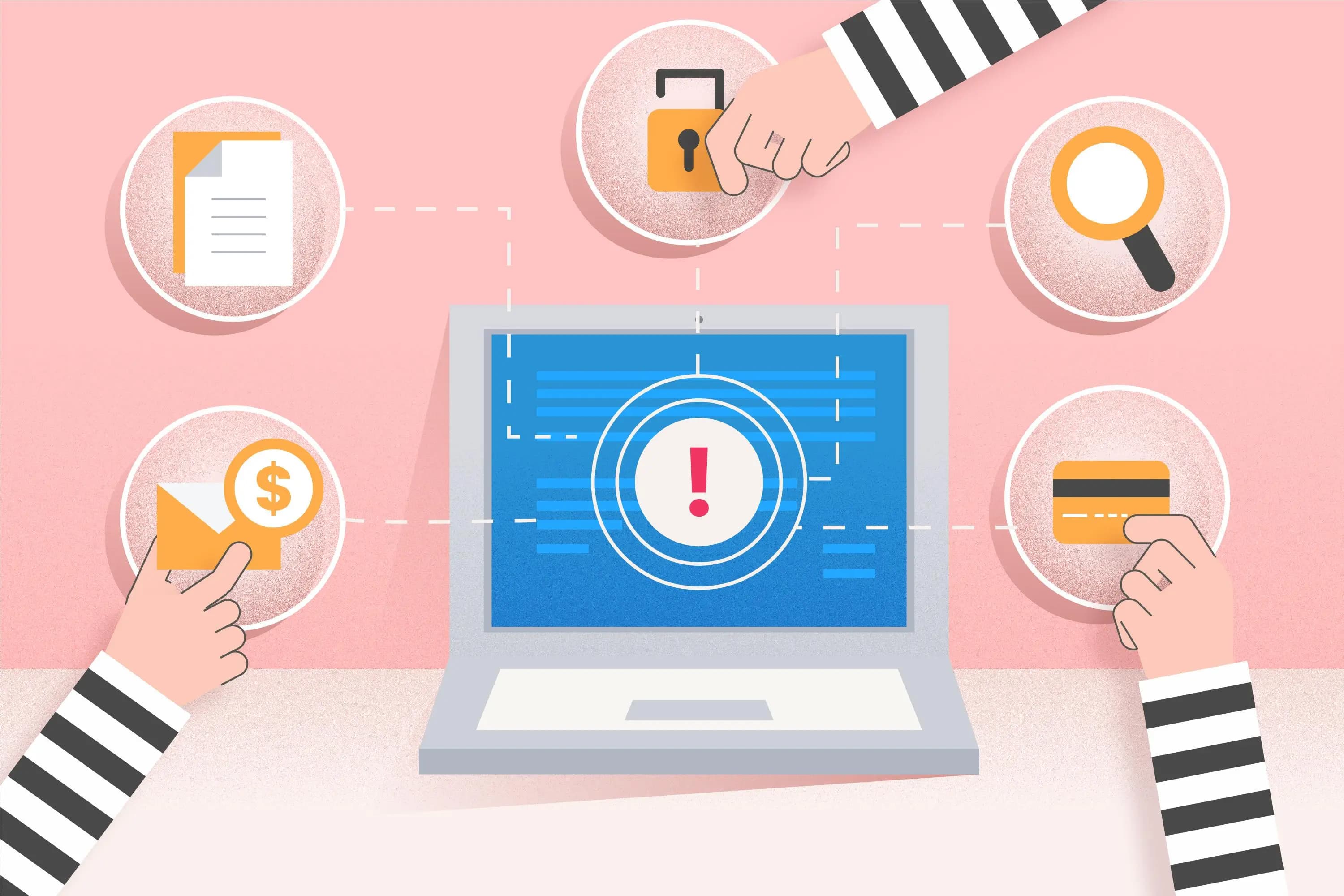
Fraud in the Digital Era: New Challenges for Financial Institutions and Regulators

The digitalization of financial systems accelerates transactions, expands access, and lowers operational costs. However, this acceleration also fundamentally changes the nature of fraud risk. Whereas fraud used to occur within limited scopes and could be detected through periodic audits, fraud schemes can now take place across platforms, across jurisdictions, and within seconds.
Financial institutions and regulators are no longer facing merely an increase in the volume of cases, but also a shift in the structure and speed of risk.
Changes in the Nature of Fraud in the Digital Ecosystem
According to the ACFE Report to the Nations, fraud remains dominated by asset misappropriation and reporting manipulation, but the methods of execution are evolving using digital technology. In the context of digital finance, several key shifts include:
- The use of synthetic identity fraud
- Exploitation of APIs and inter-platform integration systems
- Abuse of internal access through cloud-based systems
- Micro-transaction patterns that are difficult to detect through traditional sampling
Fraud is no longer always in the form of conspicuous large transactions. Now, fraud can be spread across thousands of small transactions, which in aggregate produce a significant impact.
Limitations of Conventional Oversight

Many internal control systems still rely on:
- Manual reconciliation
- Sample-based auditing
- Static rule-based monitoring
- Periodic reporting
These approaches are indeed effective in systems with limited volume and complexity. However, in a digital ecosystem with real-time transactions and cross-system integration, such approaches tend to be reactive.
The Bank for International Settlements (BIS), in its various publications on digital finance and AI, emphasizes that technological developments expand the "risk surface" of financial institutions, so that oversight models must evolve from periodic to continuous. Similar points have also been made by the FSB.
When transactions occur on a large scale and in real time, detection latency becomes a major risk factor.
Challenges for Regulators
Regulators face a structural dilemma:
- The financial ecosystem now involves non-bank entities and digital platforms.
- Risk assessment algorithms are proprietary and complex.
- Data is scattered across various systems and service providers.
In this context, supervision is no longer just about assessing administrative compliance, but also encompasses the quality of technology-based risk management, model governance, and transparency of analytical methodologies.
The OECD and BIS emphasize the importance of accountability and explainability principles in the use of AI in the financial sector.
Regulators not only oversee transactions, but must also oversee the systems that produce decisions on those transactions.
Data Complexity as a Challenge

One factor that is often overlooked is the complexity and fragmentation of data. Why is that?
In many financial institutions, transaction data comes from various sources, often in non-uniform formats. As a result, reconciliation requires manual intervention.
Moreover, monitoring often relies on simple threshold-based rules.
When data is unstructured or not consistently validated, analytical systems tend to produce false positives or—more riskily—fail to detect significant anomalies.
Digital fraud is not just a problem of malicious intent, but also a problem of speed, scale, and data complexity.
Towards Continuous Analytics-Based Supervision
Facing these dynamics, financial institutions need to move from a passive detection approach toward continuous data-driven analysis, encompassing:
- Parsing and normalization of transaction data
- Cross-system integration
- Machine learning-based anomaly analysis
- Periodic model validation and monitoring
Technology does not replace governance but serves as a tool to enhance the precision and consistency of oversight. A system capable of reading and analyzing transactions in a structured manner helps accelerate the identification of irregularities before they develop into material losses.
In the digital era, the effectiveness of supervision is no longer determined by how often audits are conducted, but by how quickly and accurately data can be analyzed.