The Gaps Between the Pages: Why Manual Fraud Detection Is No Longer Enough to Protect Your Profits

For many financial institutions in Indonesia, fraud isn't always about dramatic, large-scale heists. Often, it's a "subtle leak"—small yet systematic transaction anomalies hidden among thousands of pages of bank statements.
If your team still relies on manual verification or random sampling, you aren't managing risk—you are gambling with the integrity of your capital.
In 2026, fraud detection is no longer about administrative compliance; it is about protecting the last line of defense for business profitability.
1. The Problem of Granularity vs. Volume
Humans have cognitive limitations. As document volume increases, attention to detail decreases. Manipulations such as structuring (breaking large transactions into smaller ones to avoid detection) or non-business transactions disguised as operational expenses often go unnoticed because they appear "normal" in aggregate reports.
Ignoring this carries the risk of producing partial and incomplete interpretations when assessing financial health.
2. From Snapshots to Continuous Monitoring
A fatal mistake of many organizations is conducting oversight only at the end of a reporting period. This creates a timing gap that fraud perpetrators exploit to engage in window dressing—improving the appearance of cash only at the report cutoff date.
The latest Indonesian Fraud Report shows that losses from financial statement manipulation remain among the highest in the financial sector.
Safe business decisions require an infrastructure capable of reading transactions deeply and quickly, detecting anomalies exactly when they occur—not the following week after the money has already left.
3. Anomaly Detection: Reading Invisible Patterns

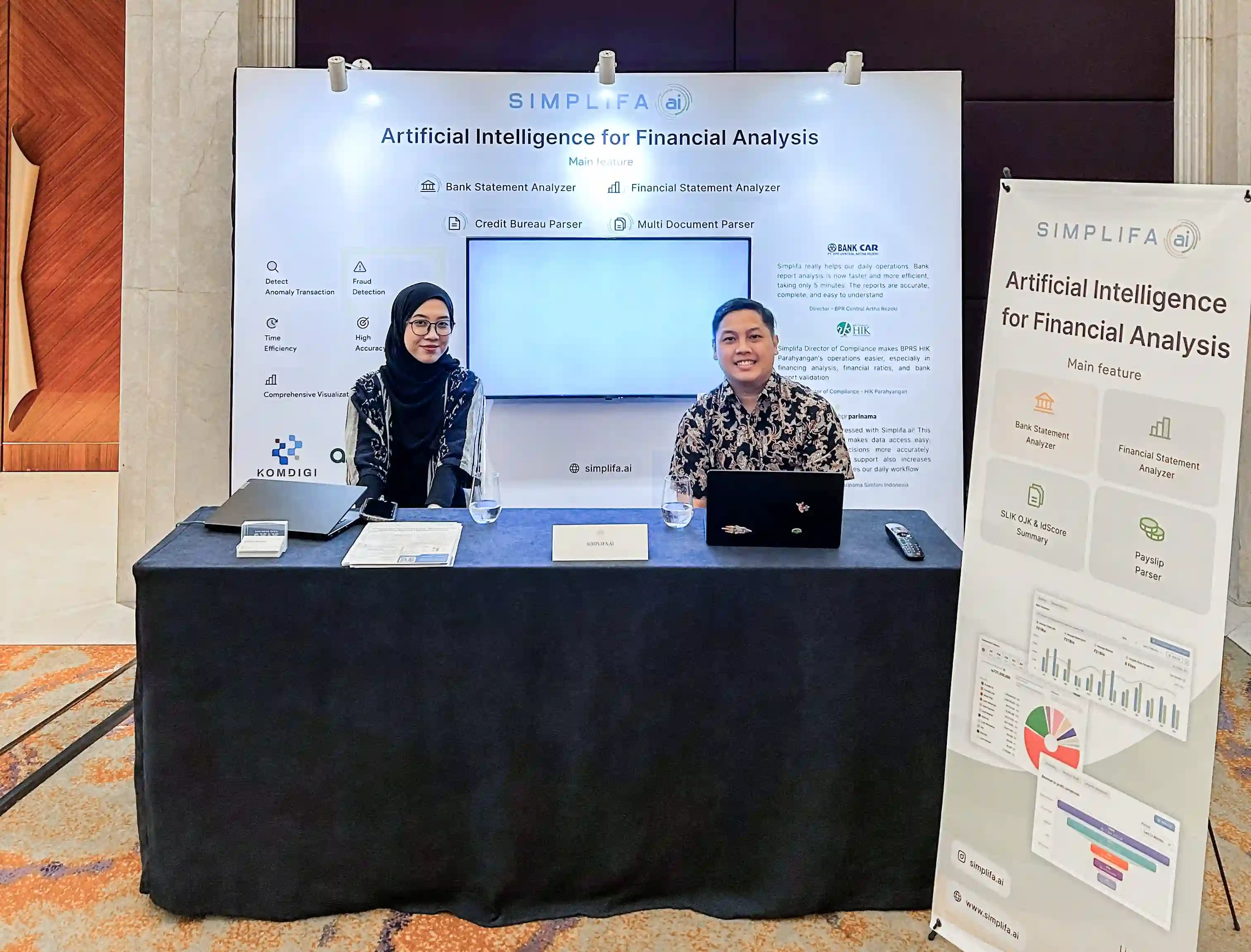
Simplifa.ai is designed to close the blind spots that even the sharpest human eye cannot see. With over 50 value-based rules and support for LLM technology (human-in-the-loop), this system doesn't just extract data—it "senses" unusual transaction patterns.
Discrepancies in transaction patterns can signal risks that significantly impact creditworthiness assessments.
The ability to process data from 150+ banks within minutes ensures that every transaction is examined, every anomaly is flagged, and every rupiah of your capital is protected.
4. Trust as the "Currency" in the 2026 Capital Market
In the era of digital transparency, trust is no longer just a sweet promise in annual reports; trust is the result of undeniable data auditability.
For financial institutions, having an automated fraud detection system is not just about internal security—it is a strong signal to investors and regulators that your organization has sound governance.
A system capable of validating numerical consistency and systematically detecting irregularities will increase the company's bargaining power during fundraising or compliance audits.
The inability to detect fraud before the reporting period closes often leads to regulatory sanctions that are far more costly than the technology investment itself.
Regulations regarding data governance and financial crime prevention in Indonesia are being further tightened to maintain the stability of the banking system.
5. Cost Efficiency: Eliminating the Hidden Costs of Manual Analysis

Many companies are unaware of the "hidden costs" behind manual verification processes. Beyond the risk of human error, there is the cost of wasted time when your expert teams spend hours simply parsing repetitive documents.
By automating analytical workflows, you not only close fraud gaps but also optimize company operations. Processes that used to take up to 14 working days can now be completed in just minutes. This allows your best human resources to focus on strategic decision-making—rather than on raw data processing.